Keeping the accepted list simple makes sorting waste easier and helps produce high-quality compost for farms, parks and gardens.
These changes have been developed collaboratively through the WA Local Government Association (WALGA)'s Consistent Communications Collective with representatives from local government, waste industry and State Government.
Why is FOGO Important?
Food organics and garden organics make up a large proportion of household waste. FOGO helps divert these valuable materials from the general waste bin so they can be turned into compost and other recycled organic products. Separating food scraps and garden waste also leaves more space in the general waste bin for items that can’t be recycled or composted.
Products like compost can then be used in farms, parks, gardens and landscaping projects, returning nutrients to the soil and supporting healthy plant growth. FOGO is helping Western Australians recover valuable resources and reduce waste to landfill, supporting a more sustainable future for our communities.
Read the Waste Authority’s position statement on FOGO here:
https://www.wasteauthority.wa.gov.au/images/resources/files/2020/09/Position_statement_on_FOGO_collection_systems.pdf
What can I put in my FOGO bin?
Your FOGO bin is for food organics, garden organics and certified compostable caddy liners only.
- Food organics include food scraps such as fruit and vegetable scraps, meat scraps, seafood, bread, dairy, eggshells, loose tea leaves and coffee grounds, and plate scrapings, and out-of-date food (unpackaged).
- Garden organics include garden waste such as grass clippings, plant cuttings, leaves, flowers, weeds, small branches and twigs.
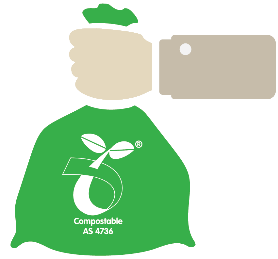
- Certified compostable caddy liners can be used to collect food scraps. You can use council-supplied liners, supermarket fruit and veg produce bags with the logo or purchase your own certified compostable bags. Make sure you look for AS4736 and the seedling logo like below.
Why are only food scraps, garden waste and compostable caddy liners allowed?
Western Australian processors, in collaboration with local governments, are making an important adjustment to what can go in FOGO to make sorting easier and to help create cleaner compost. A shorter accepted list means less guesswork at home and helps processors produce clean, high-quality compost for farms, parks and gardens.
Certified compostable caddy liners help make it easy to collect food scraps in the kitchen, ready for disposal in the FOGO bin. These are supported in FOGO because they are specifically designed to break down during commercial composting.
What happens to my FOGO after it's collected?
Your food scraps and garden waste go to a licensed facility where they are turned into recycled organics, such as certified compost. The facility processes the organic material to meet Australian Standard AS 4454 for soil safety and quality.
These products are sold for use in agriculture, urban amenity uses such as landscaping or use by local governments and households.
Watch how your FOGO is turned into compost here:
Where your FOGO waste goes: the journey from bin to compost.
Why can't I put food packaging in the FOGO bin?
Kerbside FOGO bins are designed for food organics and garden organics, not packaging.
Food packaging is made from many different materials. Some look like compostable items but do not break down properly in the FOGO process. Others may contain coatings or additives that are not suitable for compost.
Some food packaging, like tins, glass jars and plastic containers, can be recycled in your yellow-lidded recycling bin. Packaging like soft plastics and soiled paper or cardboard belong in your red-lidded general waste bin.
What should I do with tissues, paper towels, pizza boxes or tea bags now?
These items should go in your red-lidded general waste bin.
You can also choose low-waste options, such as trying reusable alternatives for tissues, paper towels and single-use takeaway containers or switching to loose-leaf tea.
Why can't I put pet poo in my FOGO bin?
Animal droppings, including pet poo and kitty litter, need to go in the general waste bin.
This is a precautionary measure because animal droppings can carry parasites and pathogens that may not be reliably destroyed during the composting process. Although only a small number of households previously used the FOGO bin for animal droppings, removing it completely helps make sure the compost stays clean and suitable for use in gardens, parks and farms.
Bagging animal droppings tightly helps to keep smells contained in your general waste bin.
Do I need to change anything about how I use my FOGO bin?
Most households will not need to change much. Keep using your FOGO bin for food scraps and garden waste.
If you previously added compostable food or drink containers, tissues, paper towels, food-soiled cardboard or animal droppings to FOGO, these must now go in general waste. Clean paper and cardboard packaging can go in the yellow-lidded recycling bin.
You can keep using certified compostable caddy liners.
Why does compostable packaging go in landfill and not the FOGO bin? Aren’t they compostable?
Kerbside FOGO processing systems can’t reliably distinguish between certified compostable and non-certified packaging.
Some packaging can introduce contamination from plastics, coatings and chemicals of concern. Limiting what goes into FOGO reduces the risk of contamination from products that are not compostable. For this reason, all non-recyclable packaging, including compostable cups, containers and trays, must go in the general waste bin. In the meantime, alternative pathways for compostables are being investigated.
Avoiding waste and choosing reusables wherever possible is best, while compostable alternatives are permitted as a lower‑impact option where single‑use items are still needed and reusables are not practical.
What is PFAS and why does it affect what goes in FOGO?
Per- and polyfluroalkyl substances (PFAS) are a group of chemicals that can be used to make some products resistant to water, grease or stains. They do not break down easily and can affect the quality of compost.
Some paper-based products and food packaging may contain PFAS, plastic coatings or other materials that are not suitable for composting. These products vary widely and can be difficult to identify during processing, so they are not accepted in FOGO.
Can I still line my kitchen caddy with newspaper or paper towels?
No. Newspaper, paper towels and other paper products are no longer accepted in FOGO. Some paper and cardboard products may contain PFAS and other chemicals. To help keep FOGO clean, paper and cardboard products are no longer accepted.
If you want to line your caddy, use certified compostable caddy liners with the AS 4736 seedling logo. These are accepted in FOGO because they are designed to specifically help households collect food scraps and have been assessed as suitable for use in FOGO systems.
You can also use your kitchen caddy without a liner and rinse it out after emptying food scraps into your FOGO bin.
What do I do with shredded paper?
Shredded paper should now go in your red-lidded general waste bin. It is no longer accepted in the FOGO bin as some paper products may contain coatings or additives that are not suitable for compost.
While paper can usually be recycled, shredded paper is too small and light to be sorted properly at recycling facilities. Placing it in general waste helps keep both recycling and FOGO streams clean and effective.
If you’re looking to reduce waste, consider shredding only what’s needed for privacy, or switching to digital records where possible. Keeping paper whole and unshredded means it can often be recycled instead.
Can I compost paper or certified compostable packaging at home instead?
Some people choose to compost paper products at home. Because you control what goes into your home compost system, you can choose to compost uncoated paper products that do not contain inks or dyes.
If you compost at home, make sure any certified compostable products meet the Australian home composting standard (AS 5810) and display the home compost logo or certification number. 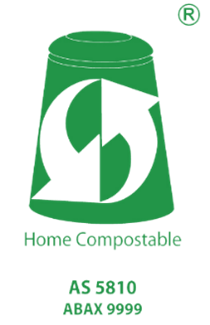
How can I reduce moisture in my FOGO bin without using paper or cardboard?
Let hot food cool before placing it in the caddy. Warm or freshly cooked food releases steam, which adds moisture to your bin.
Drain excess liquids from food scraps before disposal, where possible. Empty your kitchen caddy regularly and keep your outside bin clean, dry and in the shade.
A light sprinkle of bicarb soda in your caddy or bin liner can help absorb moisture and reduce smells. Adding dry leaves to your outdoor bin can also help soak up excess liquid. Freezing wet or high moisture scraps and placing them in the bin just before collection is another effective way to reduce moisture and odour, especially during warm weather.
How can I reduce odours in my household bins?
A few small changes can help reduce household bin odours, including in hot weather. Bag and tie items such as nappies, animal droppings and hygiene products before placing them in the general waste bin, and store bins in a shaded area where possible.
Empty your kitchen caddy regularly, keep your outdoor bins clean and dry, and place wet food scraps in the FOGO bin as close as practical to collection day.
For more practical tips, you can refer to the Managing Odours Informational flyer.
How will these changes help make better compost?
Using your FOGO bin only for food scraps and garden waste reduces the need for resource-intensive sorting, reduces some contamination risks and improves processing efficiency to create quality FOGO-derived compost and products. This helps facilities run efficiently and supports market confidence in FOGO-derived compost.
Will my general waste bin fill up faster now?
You may notice a small increase in what goes into your red-lidded general waste bin, and this will vary between households. Putting all food scraps and garden waste in your lime-green FOGO bin, and all recyclables in your yellow-lidded recycling bin, can maximise space in your red-lidded general waste bin, although we understand some households may find it difficult to fit everything in.
Who decides what can go in the FOGO bin?
The WA Local Government Association (WALGA)'s Consistent Communications Collective (CCC) with representatives from local government, waste industry and State Government, and maintains the “Agreed List” for FOGO inputs, along with other kerbside bins.
This can be found recycleright.wa.gov.au/a-z.
The CCC collaborates to keep the list consistent, simple and aligned with national standards.
Your local government is responsible for local kerbside collection services. Local governments and organics processors are bound by State regulations, facility licence conditions, Australian Standards and individual contractual arrangements, which determine the exact guidance for your local area.
Is there a market for the compost made from my FOGO bin?
Yes, your food organics and garden organics are turned into Australian Standard certified compost at a licenced commercial facility. By keeping your FOGO bin contamination-free, you help support investment in WA’s organics recycling sector and help create quality compost.
Cleaner feedstock helps improve compost quality for farms, parks, local governments and soil rehabilitation projects. High-quality compost improves market confidence and supports investment in WA’s organics recycling sector.
Check with your local government to see where you can find FOGO-derived compost for your home garden.
Should I be concerned if I’ve used FOGO‑derived compost on my garden previously?
FOGO-derived compost is sampled and tested to ensure it is completely pasteurised, free of harmful weeds or diseases, and meets strict Australian safety standards ready for use in the community. The final compost must pass rigorous quality standards before it can be supplied to farms, parks and home gardens.
The changes to what can go in FOGO bins are about improving future compost quality by reducing risk of contamination, by materials which can't be composted.
What should I do if I’m not sure where something goes?
Three-bin FOGO systems in Western Australia have three simple streams:
- FOGO bin (lime-green lid): food scraps, garden waste and certified compostable caddy liners
- Recycling bin (yellow lid): clean paper and cardboard, cans, plastic bottles and containers, glass bottles and jars
- General waste (red lid): soft plastics, animal droppings, nappies, soiled paper/cardboard and general rubbish
The Recycle Right website can help you find out which bin to put things in.
Visit recycleright.wa.gov.au/a-z or contact your local government.
I live in an apartment. Will our shared bins cope with this change?
For most households, this change is expected to be manageable as the updated guidance keeps FOGO straightforward and predictable, helping people sort their waste correctly. If you have concerns about waste sorting in your complex, please speak with your strata manager or local government.
Be a GREAT Sort | WasteSorted
Why does the information on my bin lid or kitchen caddy show different information?
You might notice that information on your bin lid, kitchen caddy or older materials looks different to what you see online or in newer guides. This is because advice has been updated over time.
Some older bin stickers were created using earlier advice, while newer guides reflect the current, simpler FOGO guidance designed to reduce contamination and create cleaner compost.
Your local government may provide updated stickers or guides to help replace older information. For the most up-to-date advice, check your local government’s website or use the Recycle Right A-Z tool.